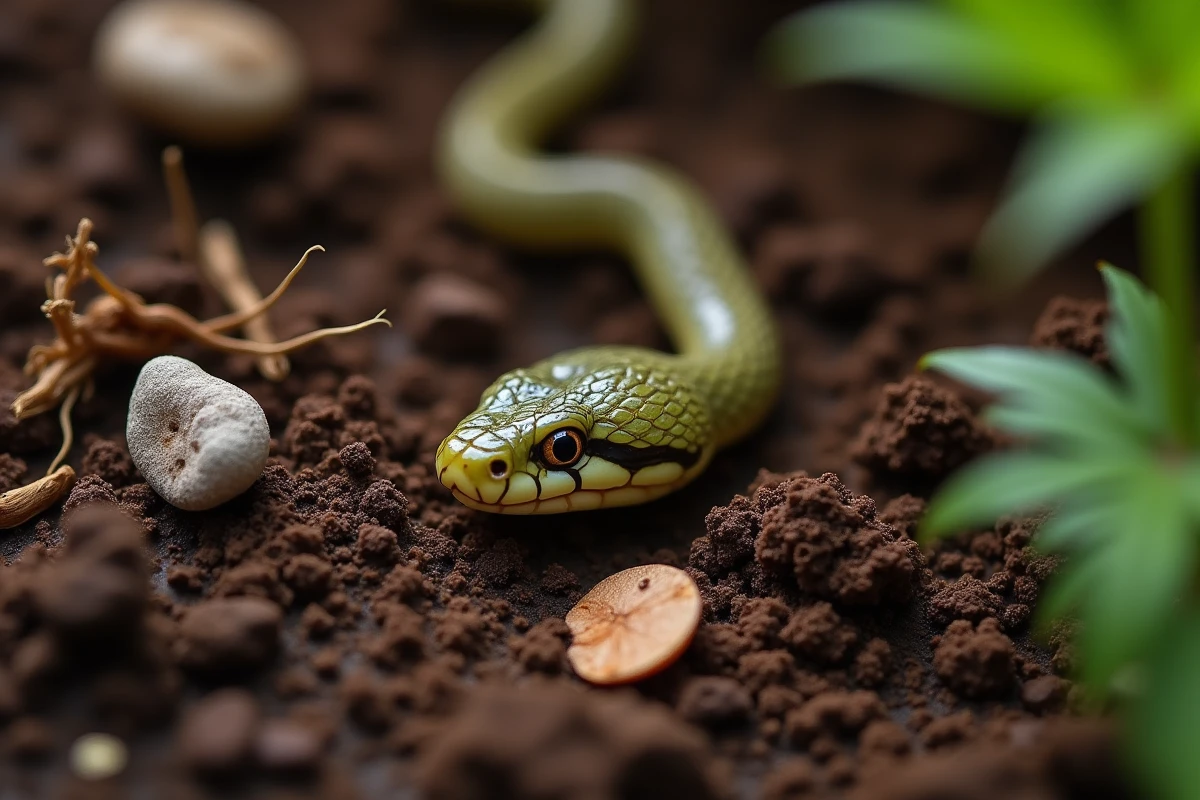
Grass snakes, protected reptiles throughout France, leave droppings in gardens that are recognizable by their two-component structure. Identifying a grass snake’s droppings allows for the assessment of local biodiversity without handling the animal, and helps to understand the ecological role that this discreet predator plays in regulating populations of rodents and amphibians.
Urates and prey remnants: reading the composition of a grass snake’s droppings
Unlike mammal droppings, grass snake droppings are distinguished by the almost systematic presence of a white, chalky tip called urate. This deposit corresponds to the uric acid excreted by the snake’s kidneys, a mechanism that allows it to limit water loss.
A normally chalky and moderate urate indicates a well-hydrated animal. Conversely, very dry and abundant urates may signal a snake in a state of dehydration.
The second part of the droppings, darker in color, contains undigested food remnants. This is where observation becomes valuable for anyone wanting to learn everything about grass snake droppings and the species that frequents their territory. Fragments of amphibian bones point to the collar grass snake, which hunts frogs and newts in wet areas. Lizard scales suggest the green and yellow grass snake, a predator of reptiles and insects.
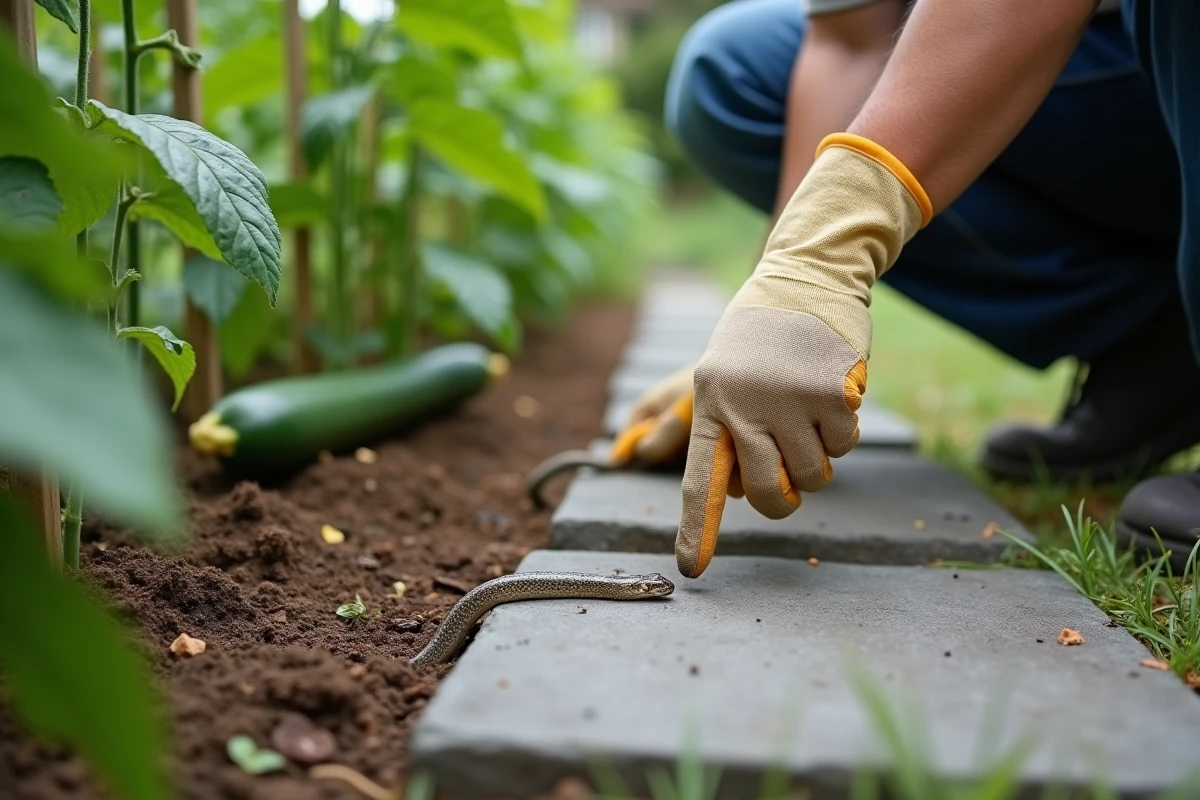
Grass snake droppings or mammal droppings: distinguishing criteria in the garden
The most common confusion is between grass snake droppings and those of hedgehogs, martens, or rats. Three visual criteria allow for a clear distinction without special equipment.
- General shape: grass snake droppings are often irregular, elongated, and sometimes coated with a translucent mucus that disappears as it dries. Hedgehog droppings are cylindrical, compact, and contain shiny remnants of insects (beetle elytra).
- Presence of urate: this is the most reliable marker. No mammal produces this characteristic white, chalky deposit of reptiles. If the tip of the droppings is whitish, it is very likely a snake.
- Odor and context: marten droppings emit a strong musky odor and are often found at height (walls, roofs). Grass snake droppings, deposited on the ground near a shelter (wood pile, compost, flat stone), have a significantly less pronounced odor.
Bird droppings, on the other hand, are liquid and bicolored (white and black). The solid and structured texture of grass snake droppings is enough to rule out this possibility.
Bio-indicator in the garden: what the presence of grass snake droppings reveals
Finding grass snake droppings in a garden is not trivial. These droppings serve as a bio-indicator of the ecological quality of the land. Their presence indicates that a complete food chain is in place: sufficient vegetation to shelter prey, dense populations of small mammals or amphibians to feed a predator, and favorable habitats (wet areas, walls, wood piles).
A garden where the grass snake settles is a garden where biodiversity thrives. The grass snake naturally regulates populations of voles, field mice, and slugs, which reduces pressure on vegetable crops without resorting to chemical products.
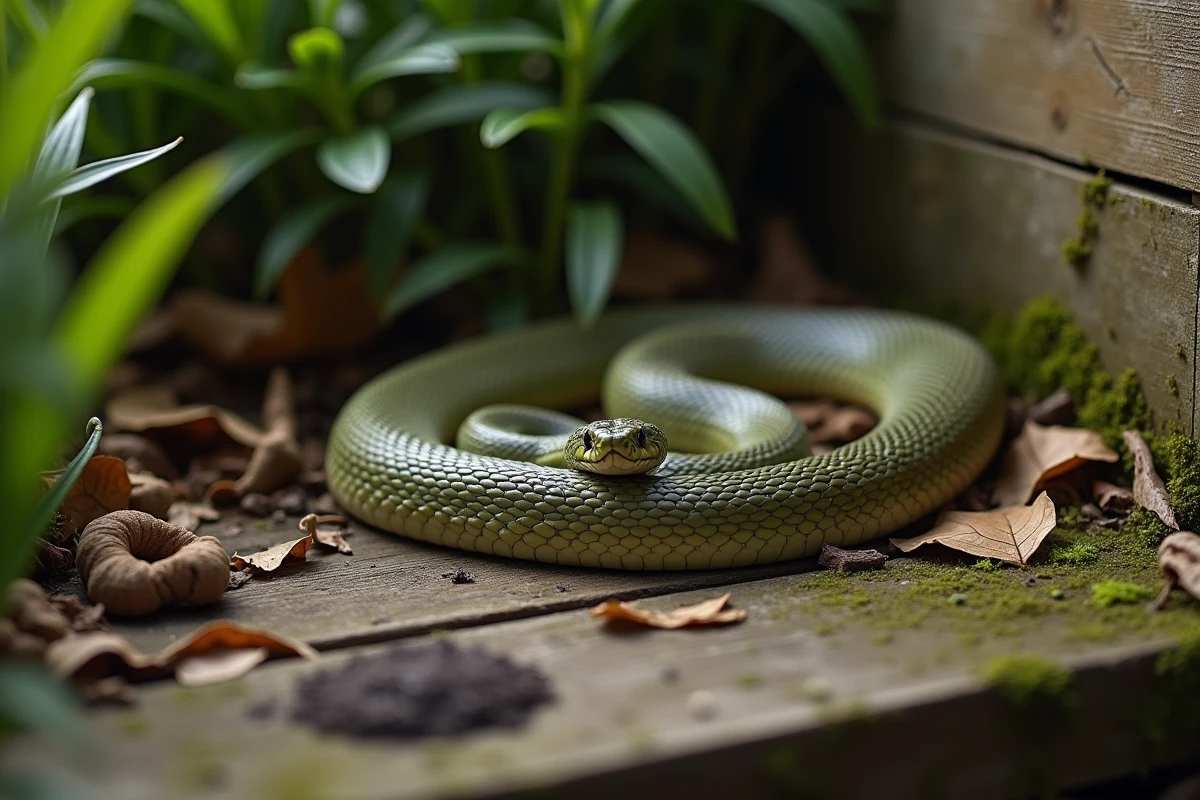
Encouraging the presence of grass snakes without intervention
The temptation to “clean” a garden by removing compost piles, flat stones, or dead wood deprives grass snakes of their thermoregulation shelters and nesting sites. Oviparous grass snakes seek warm and humid places to lay eggs, and a compost pile is a preferred nesting site.
Maintaining areas of wild growth, even small ones, and limiting mowing close to the ground across the entire area is enough to sustain a viable habitat. Grass snakes also use dry stone walls and sheets placed on the ground to capture heat, a thermoregulation behavior linked to their ectothermic metabolism.
Legal protection of grass snakes: what French law says
All native grass snakes are protected in France. Capturing, killing, and destroying their habitats are strictly prohibited. This protection extends to breeding sites and resting areas, which concretely includes compost piles, walls, and natural shelters in a garden.
Moving a grass snake or destroying a nest, even out of ignorance, can lead to penalties. In the presence of a grass snake’s droppings or the animal itself, the only compliant action is to leave the reptile undisturbed.
Minimum health precautions
Like any animal droppings, grass snake droppings can harbor bacteria or parasites. Wearing gloves while gardening in areas where droppings have been spotted is a sensible precaution. Washing hands is sufficient after accidental contact. The actual health risk remains low, much lower than that posed by droppings from rodents or pigeons.
The grass snake’s droppings, far from being a nuisance, provide concrete information about the species present, its health status, and the biological richness of the garden. Keeping it as an indicator rather than removing it is akin to retaining a free diagnostic tool, placed there by a discreet helper that works tirelessly against vegetable garden pests.