The indulgent ideas that last over time are not those that accumulate “likes” on social media. They are the ones that pass the Tuesday night filter, when the fridge is half empty and the preparation time does not exceed thirty minutes. Awakening your taste buds daily requires thinking in terms of real constraints before considering culinary aesthetics.
Actual preparation time: the filter that indulgent recipes ignore
The majority of recipes presented as “easy” display a preparation time that does not take into account washing, peeling, organizing, or heating time. We regularly observe a gap between the announced time and the actual time in home cooking.
A dish that is truly compatible with daily life is prepared by including all these steps within an acceptable timeframe. A total time of twenty to thirty-five minutes remains the threshold beyond which abandonment sets in after a few days. It is this criterion, more than the complexity of a recipe, that determines whether it will be made again.
For those looking for recipes structured around this principle, the content offered on goutsetpassions.fr precisely adopts this feasibility logic before visual appeal.
The classic trap: selecting an entire menu based on appetizing photos, without checking the ingredient list or required equipment. A homemade dish that requires a food processor, a mandoline, and three types of simultaneous cooking will not survive the second week.
Pleasure and balance recipes: structuring meals by time of day
Thinking about indulgent ideas by “time of consumption” radically changes the relevance of the choice. A chocolate dessert does not have the same place at breakfast, as a snack, or at the end of dinner. Adapting caloric density and texture to the time slot allows for maintaining pleasure without disrupting the diet.
Breakfast and snack: freshness as a lever
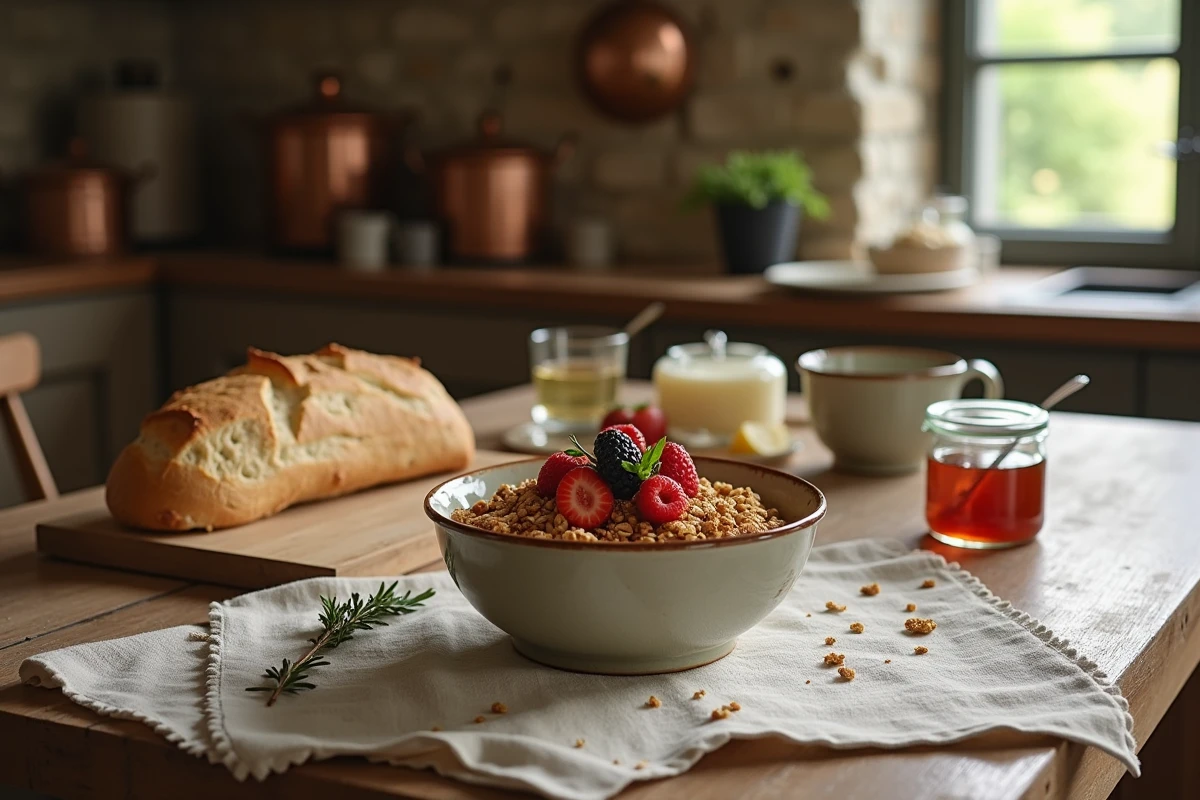
Preparations based on seasonal fruits (strawberry salad in spring, homemade applesauce in autumn) offer a freshness that industrial cereals cannot replace. Homemade granola with flakes, nuts, and a drizzle of honey keeps well all week in an airtight jar.
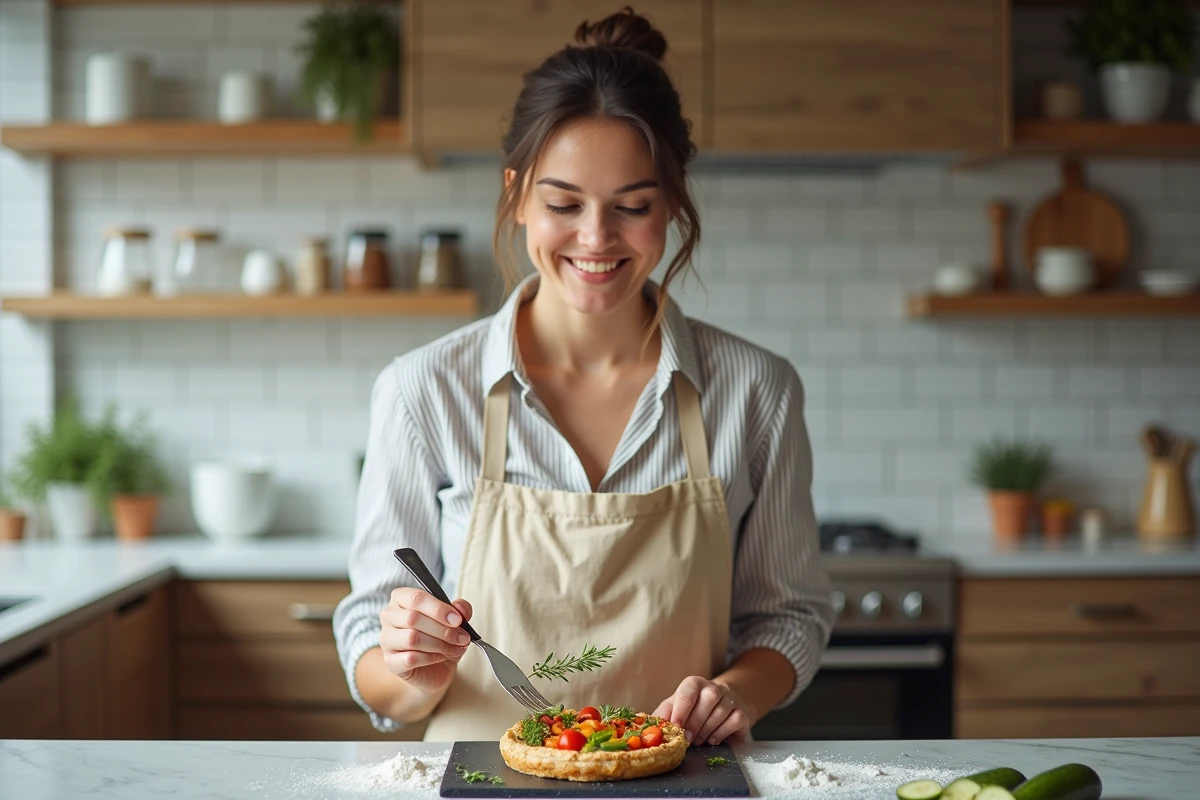
The snack, often overlooked, is the moment when sweet-salty flavors work best without guilt. A piece of shortcrust pastry with fresh cheese and herbs, for example, holds up much better than an ultra-processed cookie.
Quick dinner: the one-dish strategy
The one-dish meal remains the most robust solution for a quick and indulgent evening meal. One container, one cooking time, one cleanup: this is the structure that survives busy weeks.
- The composed meal salad (protein, cold starch, raw vegetables, homemade dressing) can be assembled in a few minutes without cooking if the elements are prepared in advance.
- The one-pot (pasta, vegetables, and protein cooked together) reduces both active time and dishes, while concentrating flavors.
- The topped slice of country bread (roasted vegetables, melted cheese, poached egg) transforms fridge leftovers into a satisfying dinner.
Substitutions and levels of difficulty: making a recipe sustainable
A recipe that offers no variations is a disposable recipe. As soon as an ingredient is missing, the amateur cook gives up and orders takeout. The indulgent ideas that last over time incorporate explicit substitutions.
We recommend thinking in terms of “ingredient families” rather than single ingredients. If a recipe calls for Saint-Nectaire, specifying that another uncooked pressed cheese will do opens up possibilities without betraying the result.

Three clearly identified levels of difficulty allow the same household to cook the same base with different ambitions depending on the day:
- Express level: assembly without cooking, raw or precooked ingredients, result in under fifteen minutes.
- Standard level: one main cooking process, a built seasoning, a neat presentation without complex plating.
- Elaborate level: two combined techniques (sear then roast, poach then gratin), sauce or garnish worked separately.
This tiered approach avoids the “all or nothing” syndrome that leads to giving up home cooking as soon as fatigue sets in.
Seasonal menu: spring-summer as a testing ground
Seasonality is not a marketing argument. It is a direct flavor lever. Spring-summer vegetables and fruits require less transformation to achieve a high level of flavor: a ripe tomato with salt and olive oil surpasses most elaborate preparations.
Spring opens an ideal window for diversifying meals without excessive effort. Asparagus, peas, radishes, and fresh herbs lend themselves to quick combinations that refresh the menu without resorting to complex techniques.
An effective seasonal dessert: clafoutis. The batter takes five minutes to prepare (eggs, flour, milk, sugar), and the fruit changes weekly (cherries, apricots, peaches). One skill, several months of variations.
The indulgent ideas that withstand daily life share a common trait: they start from constraints (time, level, available ingredients) rather than the final image. A dish made three times in a month brings more cumulative pleasure than a spectacular recipe attempted once and never reproduced.