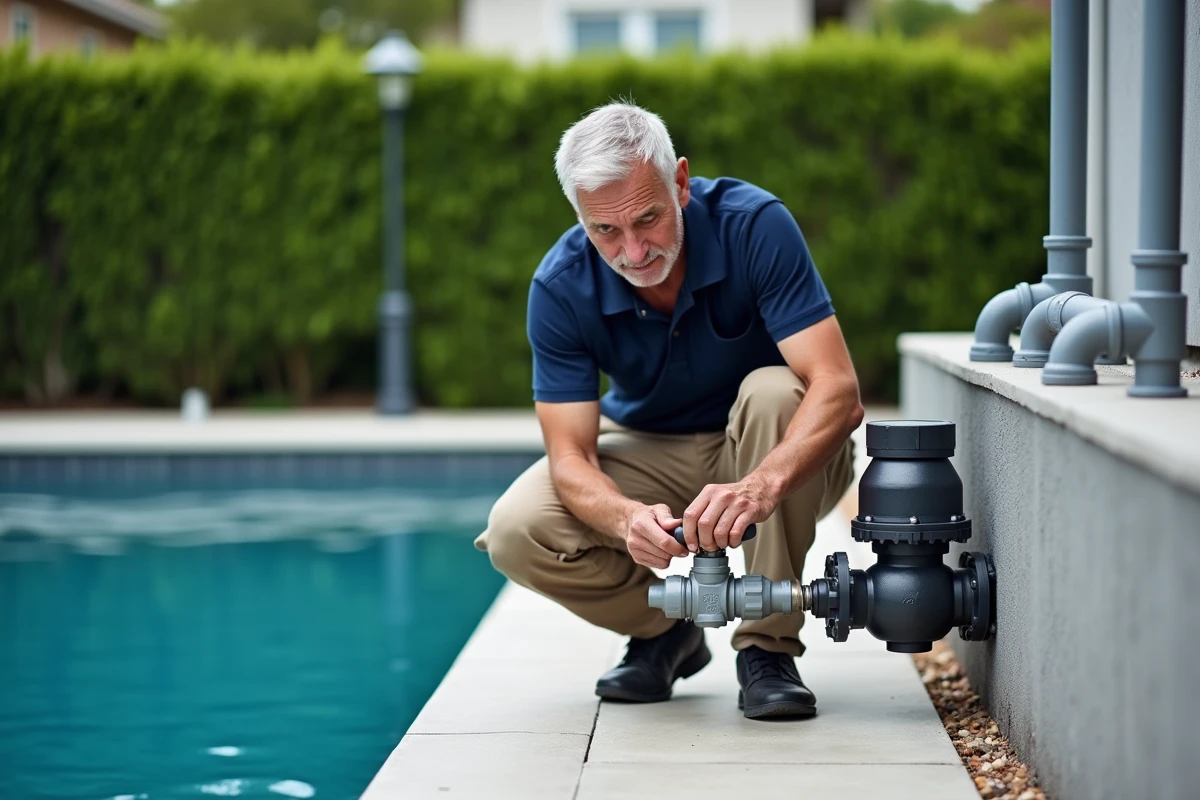
The pool vacuum inlet functions as a dedicated suction point, connected to the hydraulic circuit of the pool and directly linked to the filtration pump. For it to effectively suck up debris from the bottom, the entire (or nearly the entire) water flow must be redirected to this inlet, which requires adjusting the position of several valves in the technical room.
Role of each valve in the pool’s hydraulic circuit
Before touching anything, you need to identify the valves present in your technical room. Each one controls a section of the suction or return circuit, and their interaction determines where the pump draws water from.
The skimmer valve regulates the flow coming from the surface skimmers. The main drain valve controls the suction from the drain located at the lowest point of the pool. The vacuum inlet valve, sometimes less visible, manages the flow from the wall jet where you connect your vacuum hose.
Understanding the valve position to connect the pool vacuum inlet comes down to grasping a simple principle: the pump generates a finite flow, and this flow is distributed among all open inlets. The more valves you leave open, the less suction power the vacuum inlet receives.
- Skimmer valve: feeds the pump from the surface. Open during normal operation, it captures floating leaves and insects.
- Main drain valve: sucks water from the bottom of the pool. It aids in circulation and serves as a safety measure against losing prime.
- Vacuum inlet valve: dedicated to connecting the vacuum cleaner. Closed during normal times, it only opens during manual cleaning.
- Multiport valve (or 6-way valve): mounted on the filter, it directs water to filtration, waste, backwash, or circulation.
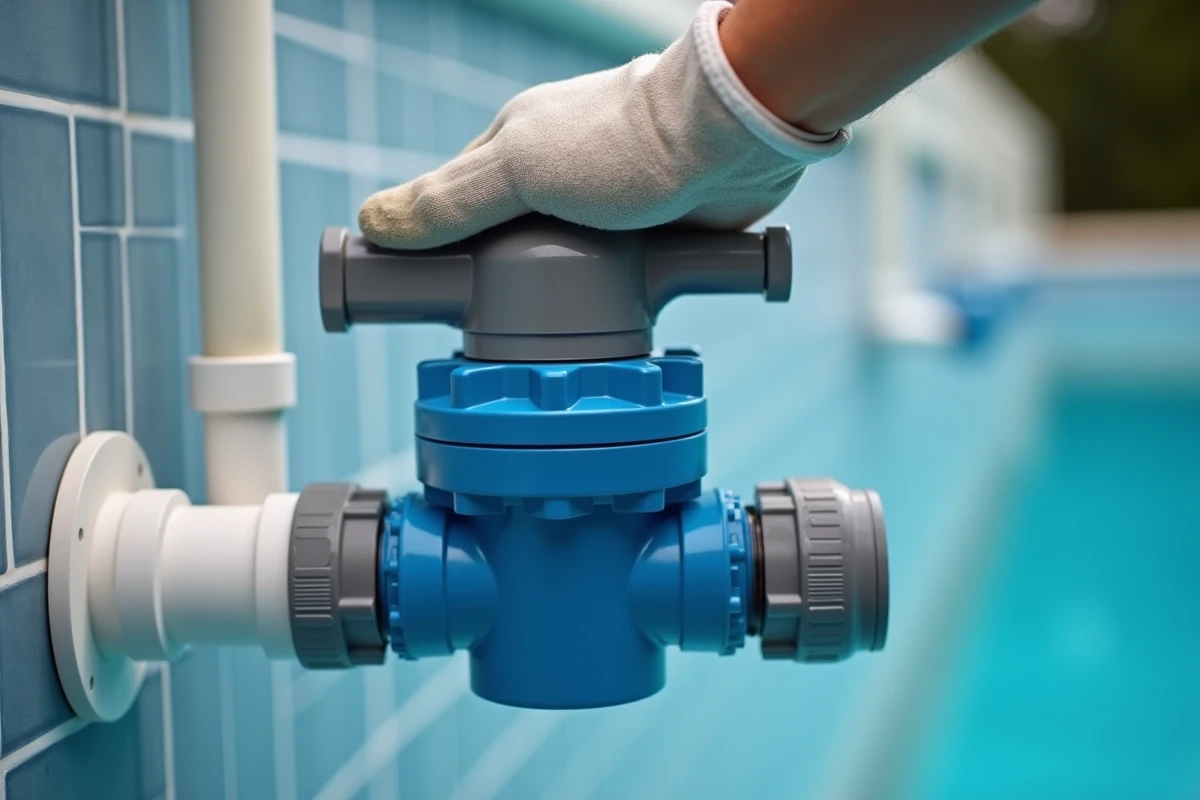
Adjusting the valves for vacuuming with the vacuum inlet
The multiport valve should remain in the “Filtration” position for standard cleaning. If the bottom of the pool is heavily soiled (algae, dirt after a storm), switch it to “Waste” to directly expel dirty water without clogging the filter.
Typical setup in the technical room
Close the skimmer valve. Close the main drain valve. Fully open the vacuum inlet valve. This setup concentrates the entire flow of the pump on the vacuum inlet, providing strong suction at the vacuum head.
In practice, this “all closed except for vacuum inlet” setup works on most traditional installations with a separate technical room. Some pool professionals recommend leaving the main drain slightly open to maintain a minimum circulation at the bottom of the pool, but this reduces the suction power of the vacuum.
Particularity of compact filtration units
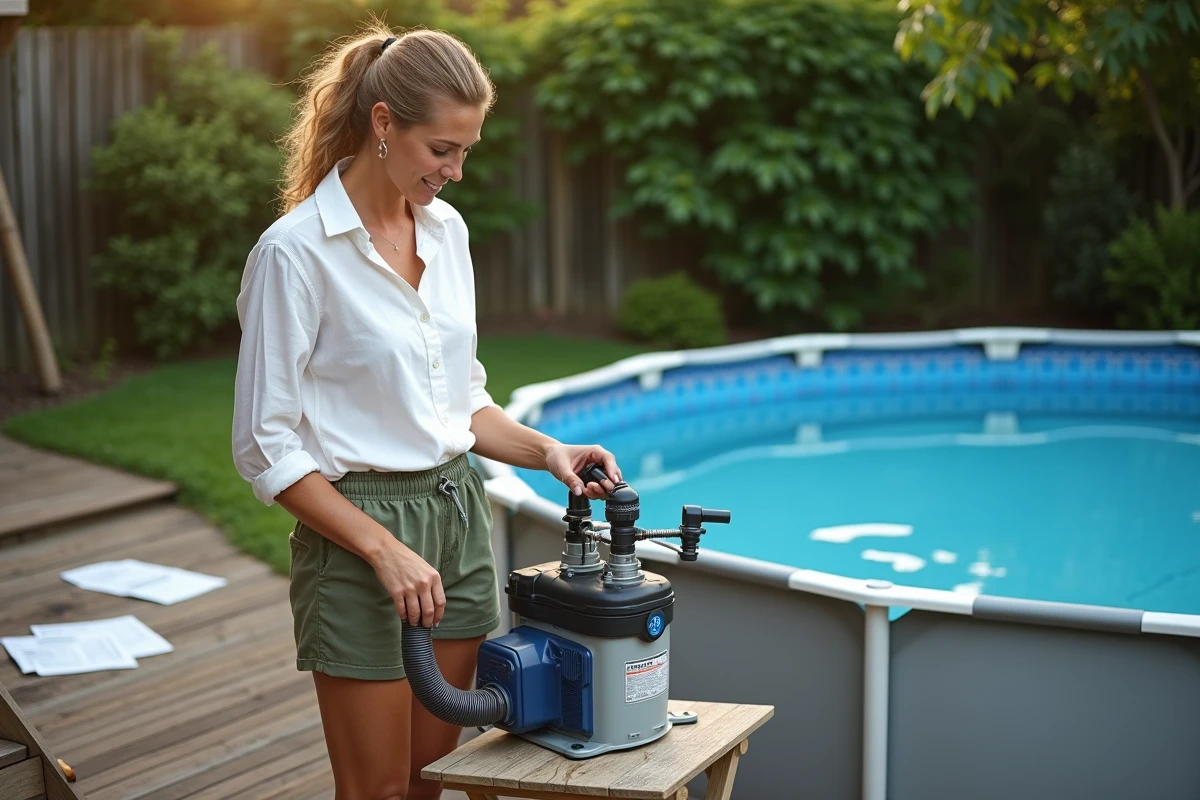
In above-ground pools or monobloc systems (like Desjoyaux GRI/PFI or Hayward Powerline), the vacuum inlet is sometimes integrated into a single rotary selector. There are no separate valves in a technical room. The adjustment is made directly on the unit by turning the selector to the position dedicated to suction. Check your equipment manual: each compact unit has its own switching logic.
Protecting the pump during manual vacuuming
Closing all valves except for the vacuum inlet concentrates the flow but also creates a risk if the suction gets blocked. A clog of leaves in the hose or a clogged pre-filter basket can cause pump cavitation (the pump runs dry, overheats, and gets damaged).
Several manufacturers (Zodiac/Fluidra, Pentair) specify in their recent manuals that it is preferable to never close all suction points simultaneously to 100%. The recommendation: maintain a slight flow through the skimmer or main drain to stabilize the pump, even if this slightly reduces the power at the vacuum.
Vacuum pre-filter: an underestimated accessory
A leaf trap (or inline pre-filter) is placed between the vacuum head and the wall connection of the vacuum inlet. It intercepts large debris before they reach the pump basket. The benefits are twofold:
- The pump basket clogs less quickly, which maintains suction flow for a longer time.
- The risk of sudden blockage decreases, protecting the pump from cavitation episodes.
- Cleaning during the session is quicker: you just need to empty the pre-filter without opening the pump cover.
This type of accessory is inexpensive and fits standard connections. In a pool surrounded by vegetation, it quickly becomes essential for long vacuuming sessions.
Common mistakes when connecting the pool vacuum inlet
The first mistake is forgetting to purge the air from the hose before connecting it to the vacuum inlet. An air-filled hose sends a bubble directly into the circuit, which can lose prime in the pump. The reliable method: fully submerge the hose, let it fill with water, then connect it to the vacuum inlet while keeping the end underwater.
The second mistake is leaving the multiport valve on “Circulation” instead of “Filtration”. In circulation mode, the water being sucked returns directly to the pool without passing through the filter. The dirt sucked up by the vacuum returns to the pool through the return jets.
The third trap: neglecting to monitor the water level. In “Waste” position, the water being sucked is expelled from the pool. An extended session without supervision can lower the level below the skimmers, which risks losing prime in the pump.
Adjusting the valves for the vacuum inlet is based on a direct hydraulic principle: concentrating the flow on a single suction point. The precise configuration depends on your installation (traditional technical room or compact unit), but the logic remains the same. Always keep an eye on the pump pre-filter and the water level during vacuuming; these are the two variables that can turn an effective cleaning session into an avoidable breakdown.