
We change smartphones when the old one struggles to the point of missing a video call, when the battery no longer lasts half a day, or when the cracked screen makes reading difficult. Choosing the best smartphone in 2024 is not just about comparing technical specifications: it is necessary to anticipate the actual lifespan of the model, its compatibility with future European standards, and its suitability for specific daily use.
Update Duration and Repairability: Criteria Often Overlooked in Comparisons
When buying a smartphone, we look at the screen size, photo quality, and processor. Few comparisons highlight the duration for which the manufacturer will provide security updates.
The upcoming European eco-design requirements foresee a continuity of security updates for five years and the availability of spare parts for up to seven years after the end of marketing. A model purchased at the end of 2024 with only two years of announced software support becomes a risk: unpatched vulnerabilities, incompatible applications, difficult resale.
Repairability is progressing as a measurable criterion, but evaluations remain partly declarative. Detailed specifications can be consulted on smartphone-test.fr to cross-reference manufacturer data with field feedback before making a decision.
Battery replacement remains a concrete point of concern. Some manufacturers advertise replaceable batteries, but the actual cost of the operation at an authorized center varies greatly from one brand to another. Checking this point before purchase avoids an unpleasant surprise in the third year of use.
USB-C Mandatory in Europe: An Immediate Buying Filter
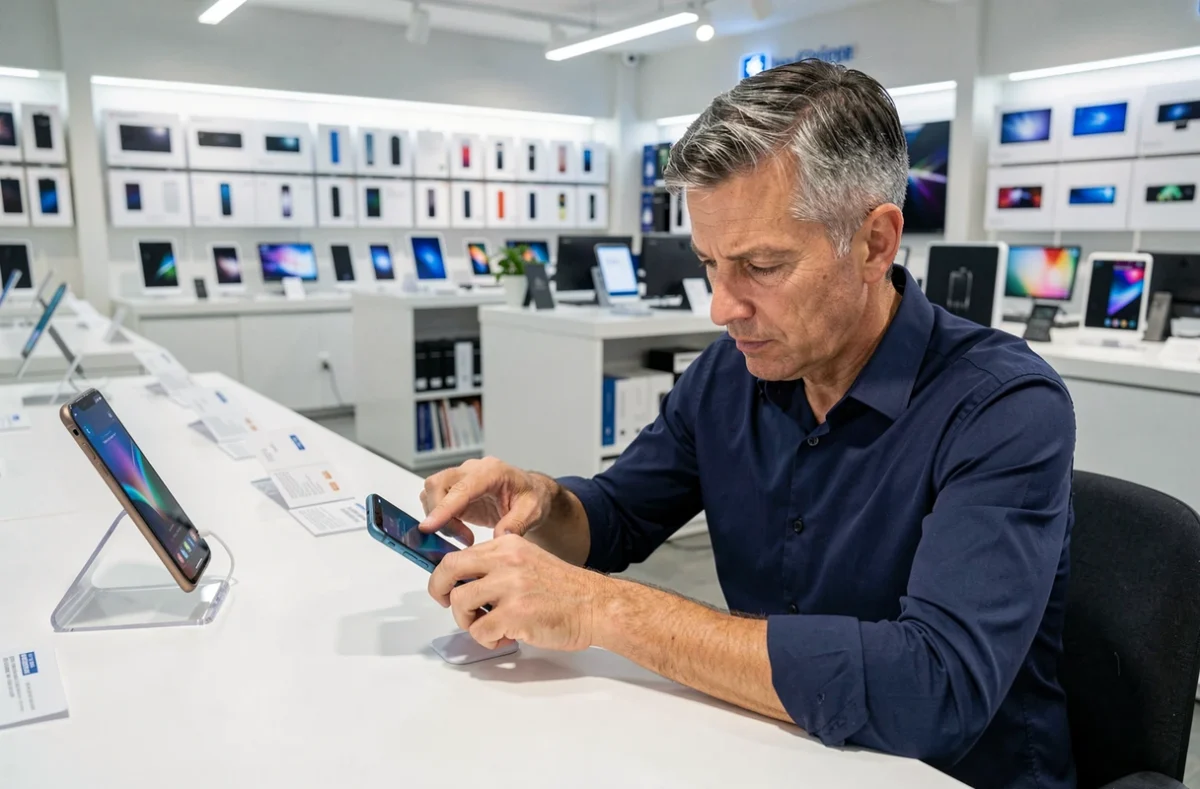
Starting December 28, 2024, new mobile devices sold in the European Union must adopt the USB-C connector. This is not a technical detail; it is a short-term compatibility criterion.
A smartphone still equipped with a Lightning or micro-USB port purchased at the end of 2024 requires keeping a dedicated charger, incompatible with recent tablets, headphones, and laptops. USB-C reduces the number of cables and limits charger obsolescence.
For Apple, the switch to USB-C concerns iPhones starting from the 15 series. Refurbished models from previous generations remain in Lightning, which should be weighed if considering a refurbished purchase to reduce the budget.
Refurbished or New Smartphone: Decide Based on Actual Use
Refurbished allows access to a high-end model at a reduced price. But the choice depends on what you realistically expect from the phone.
- For office and communication use (calls, messaging, video conferencing), a refurbished model from the previous generation is more than sufficient, provided you check the battery condition and the remaining duration of software support.
- For regular photo or video, sensors and software processing improve significantly each year. A new mid-range model often outperforms an old flagship in low-light conditions.
- For mobile gaming or resource-intensive applications, processor power and RAM count more: a refurbished model over two years old may quickly show its limits.
A well-chosen refurbished device protects the budget without sacrificing essentials, but three points must be checked before finalizing: battery condition (remaining capacity), installed operating system version, and warranty duration offered by the seller.
Galaxy, iPhone, or Xiaomi: Compare by Constraint, Not by Brand
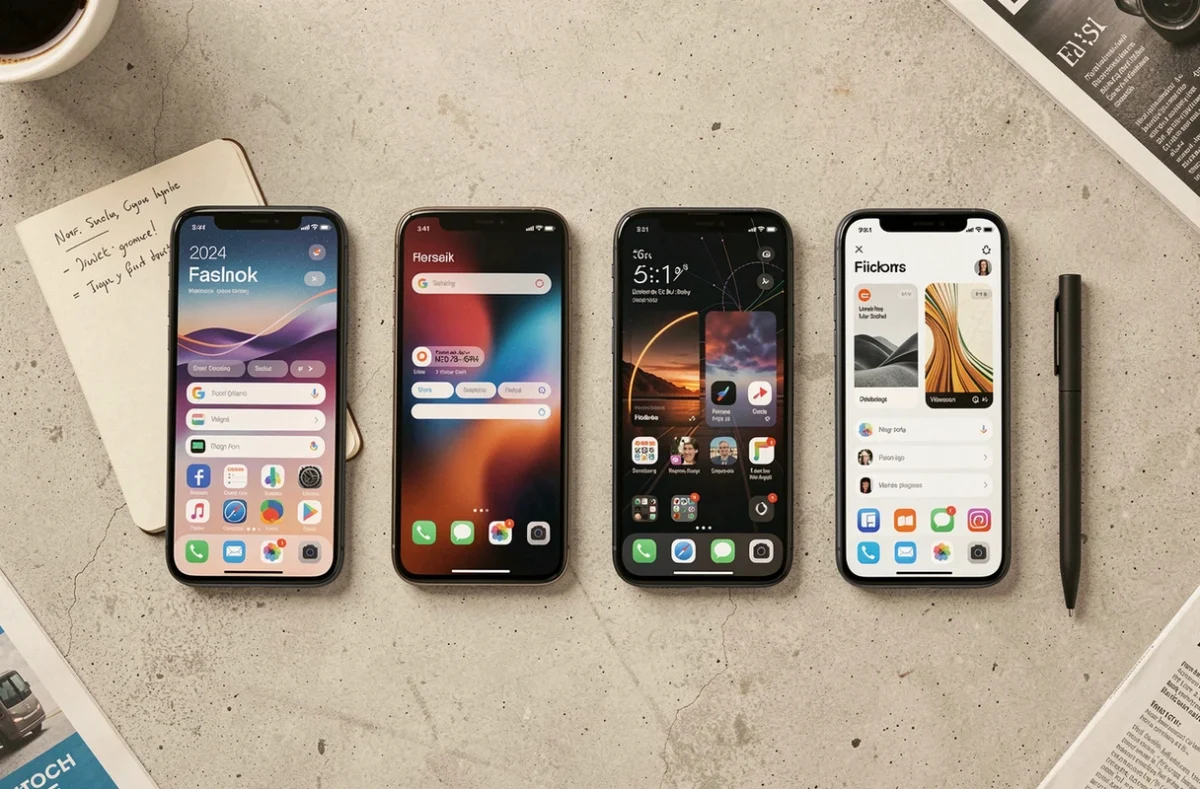
Classifying smartphones by brand leads to comparing entire ranges instead of addressing a specific need. Better results are obtained by starting from the main constraint.
Priority on Battery Life
Samsung Galaxy A series models and some Xiaomi Redmi Notes come with large-capacity batteries. Feedback varies on this point depending on charging habits, but actual battery life depends as much on software optimization as on battery size. An adaptive refresh rate AMOLED screen consumes less than a fixed high-frequency LCD.
Photo Quality in Difficult Conditions
The iPhone 15 Pro and Google Pixel stand out for their software processing of low-light shots. Samsung is catching up with its Ultra models, but the rendering remains different: more saturated colors with Samsung, more natural with Google. The choice depends on visual preference, not an absolute ranking.
Tight Budget Under Android
Xiaomi and Realme offer aggressively priced models with decent specifications for standard use. The frequent trade-off: a software overlay more loaded with advertising notifications, which can be manually disabled in the settings.
Quick Decision Grid Before Purchase
| Main Constraint | Type of Model to Target | Point of Vigilance |
|---|---|---|
| Maximum Longevity | iPhone 15 or recent Pixel | Announced duration of updates |
| Limited Budget | Xiaomi Redmi Note, refurbished flagship | Software overlay, battery condition |
| Photo and Video | iPhone 15 Pro, Galaxy S Ultra, Pixel | Color rendering depending on the brand |
| Professional Use | iPhone 15, recent Galaxy S | MDM compatibility, USB-C connector |
The best smartphone in 2024 does not exist as a universal model. It is the one that corresponds to the constraint you refuse to endure: battery dying at 3 PM, blurry photos in the evening, phone becoming obsolete after two years. Identifying this constraint before opening a comparison saves time and avoids paying for features you won’t use.