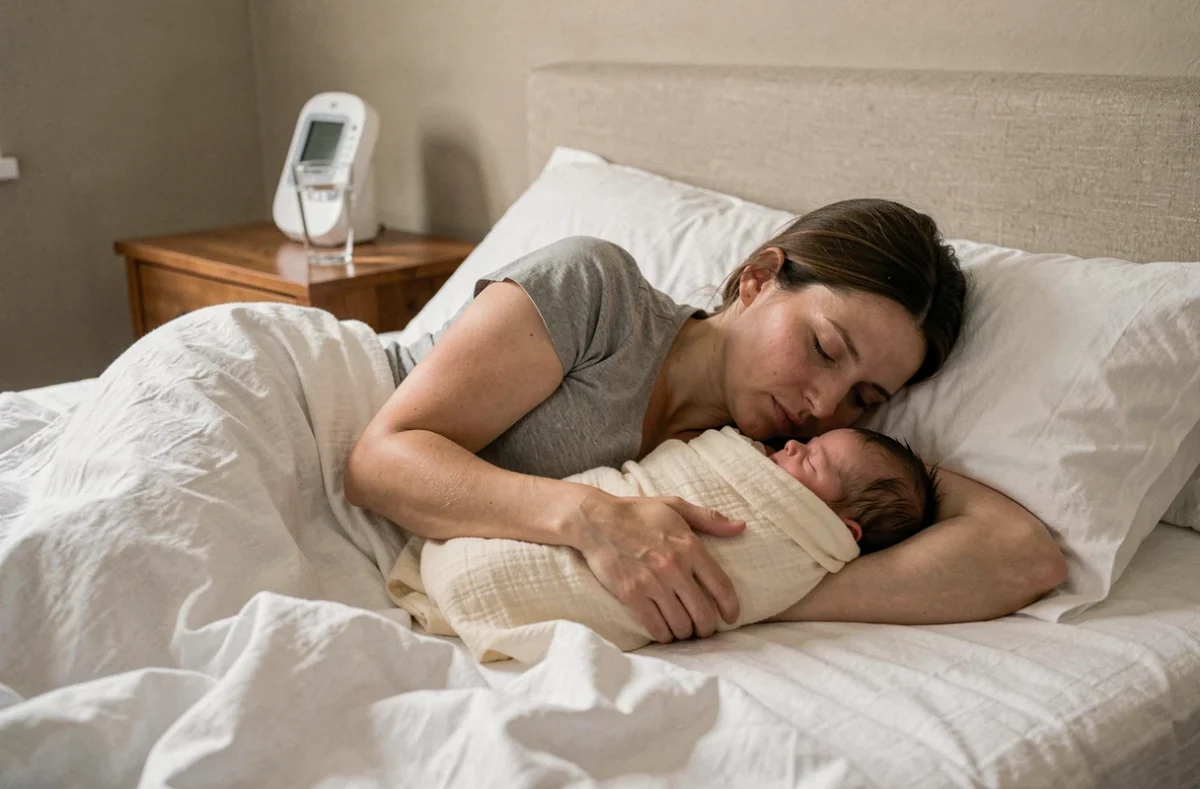
Co-sleeping can mean very different things depending on whether the baby sleeps on the same mattress, in a bedside crib, or simply in the same room. This distinction between nighttime proximity and bed-sharing affects both the level of risk and how well parents are able to rest.
A qualitative analysis of 119 posts and 525 responses from Reddit, Mumsnet and Netmums shows that sleep arrangements are not simply a matter of preference: they are shaped by fatigue, breastfeeding, housing and returning to work.
Fragmented parental sleep: what bed-sharing really changes
Being physically close to the baby can be reassuring, but it does not guarantee better sleep for parents. The micro-awakenings caused by the baby’s movements, feeds and noises add up, reducing the proportion of deep slow-wave sleep for the adult sleeping on the same surface.
A bedside crib keeps the baby close while providing a separate sleep surface. This setup makes it possible to respond quickly to the baby’s cues without experiencing the same physical disruptions as with bed-sharing. For a parent breastfeeding at night, the difference comes down to how long it takes to fall back asleep: staying in their own space reduces the cortical arousal associated with changing position.
We find that online discussions between parents focus more on personal experiences of fatigue than on official recommendations. Explicit references to formal prevention guidelines are far less common than requests for practical support. This gap points to a need for information tailored to individual circumstances, not just prescriptive guidance.
For more on the practical implications for family life, Happy Maman’s guide to sleeping with your baby explores the trade-offs families face over the months.
Nighttime breastfeeding and co-sleeping: a practical connection, not an automatic one
Breastfeeding is the main reason parents give for sharing a bed with their baby. Being close makes it easier to latch the baby, reduces the time between the baby’s waking and the parent’s response, and can support milk production during the first few weeks.

This practical connection does not mean that bed-sharing is necessary for breastfeeding. A bedside crib attached to the parents’ bed offers similar access without placing the baby on the same surface. This distinction is crucial when risk factors are present:
- Use of tobacco, alcohol or sedative medication by either adult sharing the bed
- An unsuitable sleep surface (sofa, soft mattress, or duvets or pillows near the baby’s face)
- Prematurity or low birth weight, which increase the baby’s respiratory vulnerability
The risk is not associated with co-sleeping itself, but with the sleep environment and the circumstances. American and French recommendations agree on this point: room-sharing for at least six months, but on a separate sleep surface.
Everyday constraints: fatigue, housing and returning to work
Qualitative studies of parenting forums show that sleep arrangements are the result of balancing several constraints at once, rather than a single firmly held belief. A studio or one-bedroom apartment may not have room for a separate crib in another room. Chronic fatigue in the first few weeks leads some parents to bring the baby into their bed after several unsuccessful attempts to get them back to sleep.
Returning to work increases the pressure to get enough rest at night. A parent who has to perform a demanding job after just a few hours of broken sleep may view co-sleeping differently from a parent on extended parental leave. Analysis of online discussions confirms that these trade-offs between safety, fatigue and work obligations shape sleep practices far more than firmly held principles do.
A recent study assessed the effects of a personalized support program (rather than bed-sharing alone) on maternal sleep. The authors report improvements in some sleep measures and lower depression scores in the supported group, although the sample was small. This finding highlights that professional support matters as much as sleep arrangements to postpartum quality of life.
Making an informed decision about your baby’s sleep
Making a choice means distinguishing between three situations, each with different benefits and precautions:
- Room-sharing (same room, separate bed): recommended by most health authorities for the first six months, and compatible with nighttime breastfeeding and monitoring the baby
- A bedside crib next to the parents’ bed: a compromise that keeps the baby close while providing a separate sleep surface, helping reduce adult sleep fragmentation
- Bed-sharing (same mattress): common practice, but associated with increased risk if safety conditions are not met

None of these arrangements can, on its own, make up for the sleep debt of the first few months. Parents who cope best are generally those who adapt their setup over time to reflect the baby’s development, their relationship as a couple and their own signs of fatigue.
Choosing where your baby sleeps is not a permanent commitment. A three-week-old has different needs from a five-month-old. Regularly reassessing the setup in light of how well both parents are actually resting is the most protective approach for both the baby and the family.