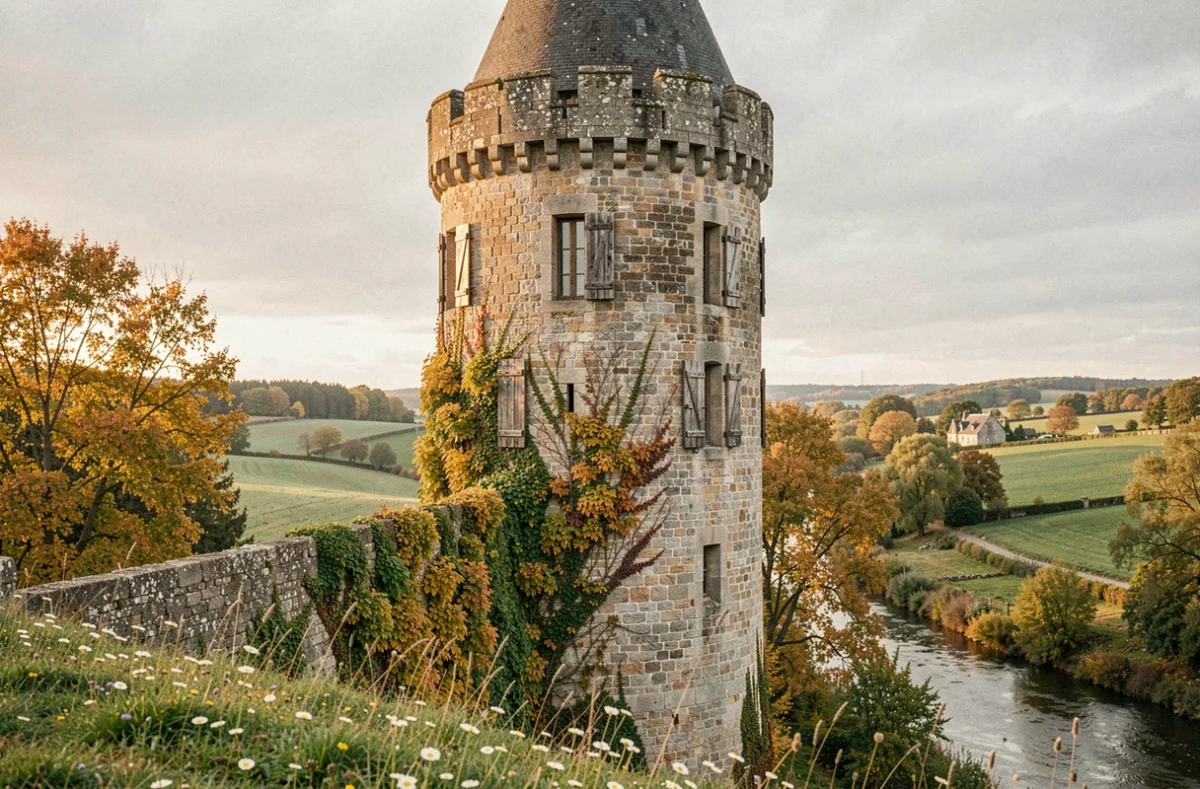
Chauvigny can be spotted from afar. Seen from the Vienne Valley, the outline of its towers and ramparts forms a distinctive ridge on the French landscape.
The Pays Chauvinois extends far beyond this hilltop town: it encompasses a region where remains far older than the Middle Ages sit alongside waterways ideal for hiking and crafts that continue to shape the local stone. To understand this area, you have to leave the upper town behind and explore its outskirts, valleys and buried archaeological layers too.
Saint-Pierre-les-Églises: heritage that predates Chauvigny’s castles
The five medieval castles draw all the attention. Their concentration on a single rocky spur is indeed rare in Europe. But the heritage of the Pays Chauvinois did not begin in the Middle Ages.
Just a few minutes from the town centre, the site of Saint-Pierre-les-Églises tells a very different story. Excavations uncovered a cemetery whose graves span more than 1,500 years of continuous occupation, from antiquity through the medieval period. According to La Nouvelle République, the honorary curator of Chauvigny’s museums raised concerns about the risk of losing ancient funerary remains when managing abandoned graves.
This kind of archaeological continuity is invaluable. It shows that the Pays Chauvinois played a role in regional history long before its fortresses were built. To explore other regions where similar layers overlap, the North Macedonia Unpacked website documents several examples in the Balkans.
The murals in the small church of Saint-Pierre-les-Églises date back to the pre-Romanesque period. They depict biblical scenes in a style that contrasts with the sculptural art of the Saint-Pierre Collegiate Church in the upper town. Two places, two eras, two techniques—but the same locally quarried limestone.
Chauvigny stone: geology and craftsmanship in the Pays Chauvinois
The light colour of the façades and ramparts comes from local limestone, a sedimentary rock quarried for centuries in the surrounding area. Chauvigny stone has been used to build far beyond Poitou.
The Gouzon Keep, now home to an industrial archaeology centre, traces this history. Its collections document the extraction and working of stone from the Neolithic period onwards. They show how a geological resource shaped the local economy, trades and even the town’s layout.
Stonemasons still practise their craft in Chauvigny. This is not folklore recreated for tourists: stone carving remains a living craft, with workshops open to visitors. The connection between the geology beneath our feet, medieval architecture and contemporary art craftsmanship provides a clear thread running through the region.
What the Gouzon Keep reveals
The museum covers more than stone. It explores the full range of industries in the Pays Chauvinois, from pottery to activities linked to the Vienne. Excavations at the site of the former maternity hospital, before the Belle Vie residence was built, also uncovered remains and artefacts spanning the early Middle Ages through to the present day. Every construction project in Chauvigny can become an archaeological dig.
The Vienne Valley: hiking and outdoor activities around Chauvigny
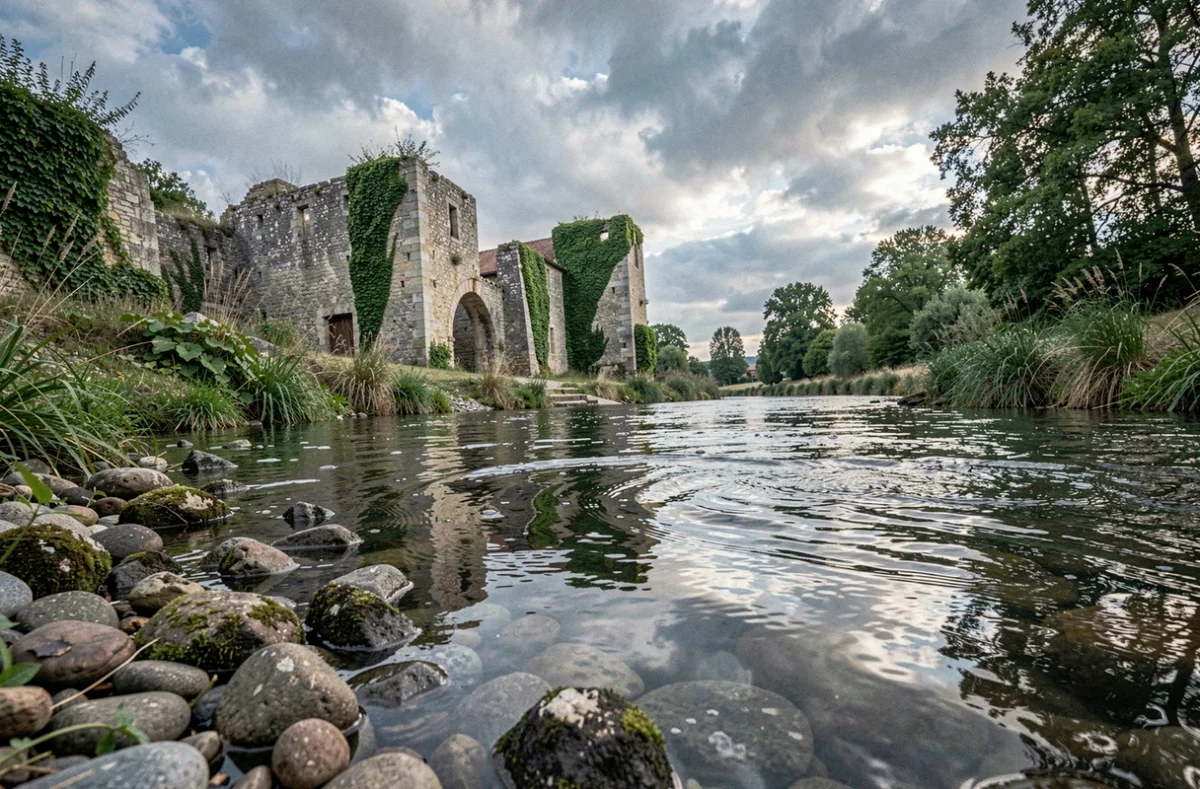
The Pays Chauvinois is more than its monuments. The Vienne Valley offers natural surroundings to explore on foot, by bike or on the water. The river has carved out varied landscapes, from limestone cliffs and wet meadows to woodland along the valley floor.
Several hiking trails connect heritage sites while passing through protected natural areas. The rail bike, which runs along a disused railway line, offers a more playful way to experience the landscape. Its elevated route provides views over the valley that are hard to find elsewhere.
- The walking loop around the medieval town descends towards the Vienne and climbs back up past the quarries, offering a chance to see the stone in its natural geological setting.
- The cycle paths around Pouillé and Leignes-sur-Fontaine connect the Pays Chauvinois to a wider network suitable for family outings.
- The wetlands in the Vienne basin help maintain river flows during low-water periods, an ecological issue monitored by the Regional Natural Park and biodiversity organisations in Nouvelle-Aquitaine.
The Vienne River links built heritage and natural environments along a single route. In less than a twenty-minute walk, you can go from the ramparts to the riverbanks.
Saint-Pierre Collegiate Church in Chauvigny: reading the Romanesque capitals
The Saint-Pierre Collegiate Church is often mentioned, but rarely interpreted. Its carved capitals deserve close attention to appreciate their full significance.
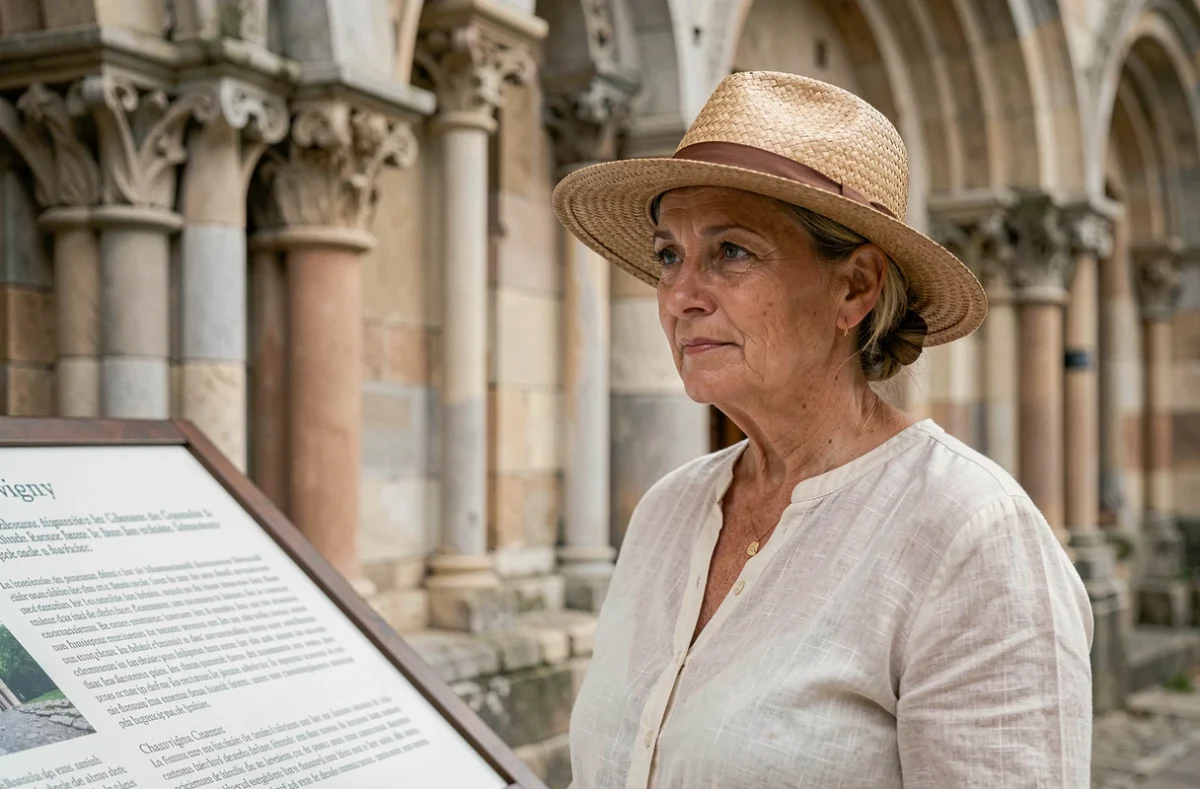
The scenes combine biblical episodes, fantastical creatures and moralising figures. Each capital tells a story for an audience that could not read. The demons, mermaids and battling lions are not merely decorative: they convey a specific theological message, tailored to the faithful of the 12th century.
What sets Saint-Pierre apart is the quality of its preservation and the variety of its scenes. The sculptors used local stone, which is softer and therefore easier to carve in detail. Here, we see the connection between geological resources and artistic expression.
Why a guided visit makes all the difference
Chauvigny’s municipal museums service offers guided tours of the medieval town. At Saint-Pierre, a guide greatly enriches the interpretation of the carved scenes. Without an explanation, you see sculptures. With a guide, you decode a medieval system of thought. Tours run throughout the year, according to a schedule available in the Museums and Heritage guide published by the town.
Arts and crafts and local life in the Pays Chauvinois
Chauvigny is not a frozen-in-time backdrop. The upper town is home to artisan workshops, mainly focused on stonework, ceramics and paper. These activities are not confined to a summer market; they are part of the local economy.
Le CLOU, a community hub in the town centre, is a testament to this vitality. It brings together shared workspaces, cultural events and community initiatives. The Pays Chauvinois combines medieval heritage with contemporary energy without one overshadowing the other.
The Pays Chauvinois owes its richness to these overlapping layers. From ancient burials to artisan workshops, Romanesque capitals to the wetlands of the Vienne, each layer enriches the next. This is a region best explored on foot, capital by capital, trail by trail.