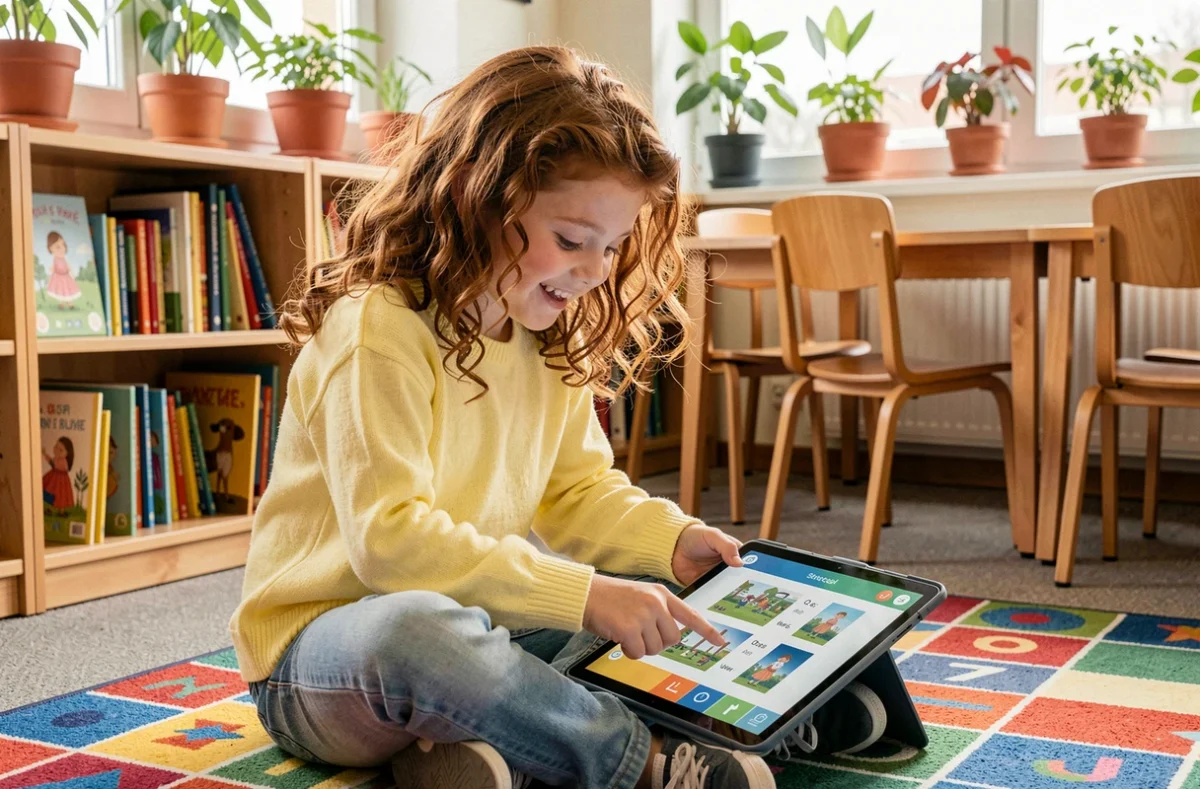
In France, a minor under the age of 15 generally cannot consent alone to the processing of their personal data on an online service. This legal framework, stemming from the GDPR and clarified by the CNIL, places the question of choosing an educational platform on a more concrete ground than a simple comparison of features.
For parents looking for a digital environment suitable for their children, the topic goes beyond the playful promise: it touches on data protection, the very design of the interface, and the actual role of pedagogy in the product.
Parental consent and personal data: what the law requires from platforms for children
The European regulation on data protection (GDPR) establishes a clear principle: when an online service relies on consent to process the data of a minor under 15, joint agreement from the child and a parent is required. This is not a recommendation; it is a legal obligation that any educational platform must comply with as soon as it collects personal information.
At the same time, the European regulation on digital services (DSA) imposes appropriate measures on platforms accessible to minors to protect their privacy, safety, and security. The approach is not limited to age verification at registration. It also concerns default settings, interaction mechanisms, and how the service is designed.
The law of July 7, 2023, regarding digital majority has been passed, but its conditions for entry into force remain pending the publication of a decree. Distinguishing between obligations that are already applicable and measures awaiting implementation prevents overestimating the current protective framework. In practice, parents cannot rely solely on regulations to filter platforms: checking data collection practices themselves remains necessary.
On the Poupala website dedicated to children, the stated approach is to offer a space designed for the youngest, with a focus on the absence of advertising and a secure environment.
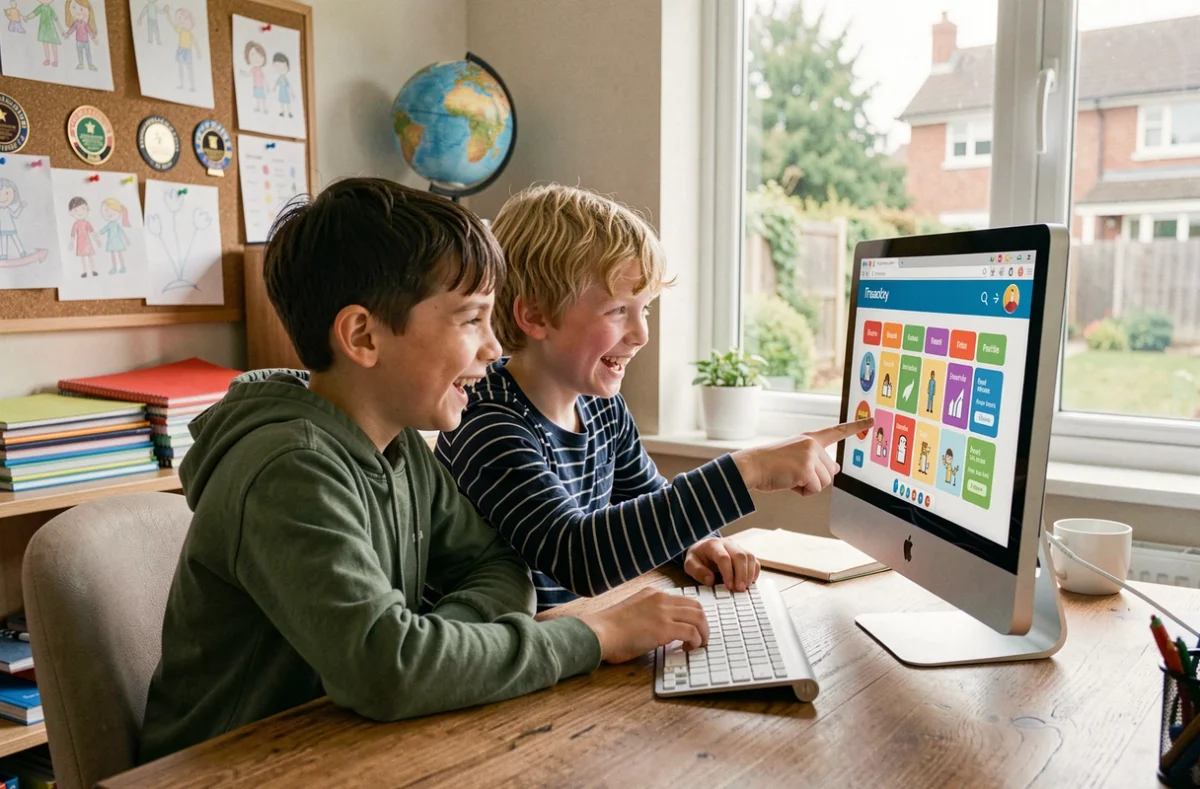
Educational platform for children: design criteria that change the experience
Most comparisons of educational platforms align the same arguments: playful content, progress tracking, colorful interface. These elements matter, but they do not differentiate a tool truly designed for children from a product that dresses up a traditional exercise tool with visual rewards.
A criterion rarely examined concerns the design of default interactions. A platform that activates messaging between users, push notifications, or public rankings does not offer the same environment as a service where these functions are disabled or non-existent. The DSA is pushing in this direction: default settings must protect the minor, not increase their engagement.
Another concrete point: pedagogical alignment with French school curricula. Some applications offer generic content translated from English, without matching the expectations of the National Education system. For a parent, the question to ask is not “Is my child having fun?” but “Is what they learn here consistent with what is taught in class?”.
Elements to check before creating an account
- Does the privacy policy explicitly mention the collection of parental consent for those under 15, and by what concrete mechanism (validation email, identity verification)?
- Does the service operate without targeted advertising, or do sponsored content appear as integrated recommendations in the interface?
- Are the educational contents indexed by French school level (CP, CE1, CE2, etc.) or by approximate age ranges?
- Can the child use the platform without being exposed to unmoderated social interactions (comments, messaging, rankings)?
Digital learning and child development: where known limits lie
The promise of a playful and educational platform rests on a postulate: digital technology, when well-regulated, can serve the cognitive development of the child. This postulate is not false, but it deserves to be nuanced by what we do not yet measure precisely.
The actual effect of an online educational game on long-term memorization depends on factors that most platforms do not document: appropriate usage duration per session, articulation with off-screen learning, the child’s attention profile. Reward systems (badges, points, unlocked levels) motivate in the short term, but their impact on intrinsic motivation, the kind that drives a child to learn out of curiosity, remains an open topic.
Screen time constitutes another blind spot. An educational platform without advertising and with quality content is still a screen. The question that parents must resolve is not only “What content?” but “How much time, and instead of what?”. No application can answer this question on behalf of the family.

What the regulatory framework does not yet cover
The DSA and the GDPR protect data and regulate certain design practices. However, no French regulation imposes pedagogical certification on platforms that present themselves as educational. A service can claim content “validated by teachers” without this assertion being verified by an independent third party.
For parents, this means that the label “educational” has no legal value. The only reliable verification remains to consult the proposed contents, compare them with school curricula, and, when possible, test the service with the child before committing.
Choosing an educational platform for children: beyond marketing
The market for educational applications and platforms for children has significantly expanded in recent years. Among free ad-supported offerings, premium subscriptions, and associative initiatives, the criterion of being free is not enough to assess the quality of a service.
A free service without visible advertising may monetize usage data. A paid subscription may offer content that is not frequently updated. The most useful reading grid combines three axes: transparency regarding collected data, verifiable pedagogical adequacy, and interface design that respects the child’s pace rather than seeking to prolong their session.
Platforms designed by teachers or childhood professionals, when this information is documented and verifiable, generally offer better coherence between the proposed content and the actual learning needs. The fact that content is interactive or multimedia does not automatically make it more effective than a well-designed paper activity. The digital tool complements; it does not replace human support.