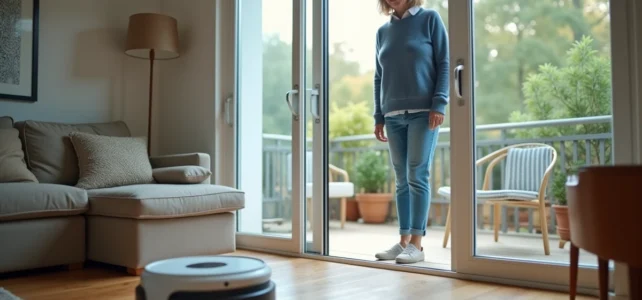
A high-end window cleaning robot can easily miss its target, especially on sloped windows. Recent tests conducted by UFC-Que Choisir in 2026 show that even at a high price, some models struggle to perform well on these specific surfaces.
To make an informed choice, the strength of the suction cups and the ease of maintenance of the robot take precedence over mere suction power. User feedback is unfiltered: the gap between marketing and real experience sometimes widens, revealing significant discrepancies in everyday use.
What a window cleaning robot really changes in 2026: comfort, safety, and innovations
The window cleaning robot has established itself as an ally that revolutionizes the chore of cleaning windows. Gone are the perilous contortions on a ladder: technology takes over, eliminating physical effort and minimizing risks. Recent models integrate into the connected home ecosystem, orchestrating the cleaning of large windows and other surfaces without constant human intervention.
Intelligent navigation is now a standard feature. Thanks to it, the window cleaning robot maps its surroundings, avoids obstacles, and adjusts its trajectory in real-time. This evolution, highlighted by numerous reviews on the UFC-Que Choisir window cleaning robot, optimizes results while reducing the need to go back over the machine’s work. Anti-fall sensors and safety cords provide peace of mind, especially on large windows or those without frames.
Technical advancements continue to accumulate. A backup battery takes over in case of a power outage, preventing inconvenient interruptions. Automatic spraying of the cleaner, home automation integration, and remote control via a mobile app make usage more flexible and tailored to each home.
To better understand the strengths of these devices, here’s what current models offer:
- Adaptability: management of sloped, vertical surfaces, glazing with or without frames
- Performance: strong suction, highly absorbent microfibers, streak-free results
- Safety: anti-fall devices, alarms, safety cords, built-in backup battery
The window cleaning robot targets anyone who wants to delegate cleaning without sacrificing quality. User feedback on the 2026 models highlights the speed of execution and the cleanliness achieved, even in the most inaccessible corners.
Which models stand out according to UFC-Que Choisir? Performance analysis and value for money
The UFC-Que Choisir selection brings several references to light, scrutinized based on concrete criteria: cleaning efficiency, autonomy, robustness of safety systems, and relevance of connected features. Their analysis clearly separates robots capable of combining real performance with reasonable investment.
Among the strengths noted during testing, the built-in backup battery plays a central role. It allows the cleaning cycle to be completed even during an electrical mishap, which is particularly reassuring for large windows or frameless ones. The safety cord, added on some models, proves reassuring for high windows.
Intelligent navigation makes a difference: robots capable of detecting an obstacle and altering their route leave fewer poorly cleaned areas. Devices offering automatic spraying of the cleaning solution speed up the removal of streaks and reduce the need for manual intervention.
Value for money is also assessed over time. Connected models and those compatible with home automation integrate discreetly into the domestic environment. Well-thought-out accessories, such as washable microfibers or easy-to-dismantle tanks, simplify maintenance. According to UFC-Que Choisir, some affordably priced robots prove reliable in the long term, while others, sometimes more expensive, disappoint with limited autonomy or the need for frequent manual touch-ups.
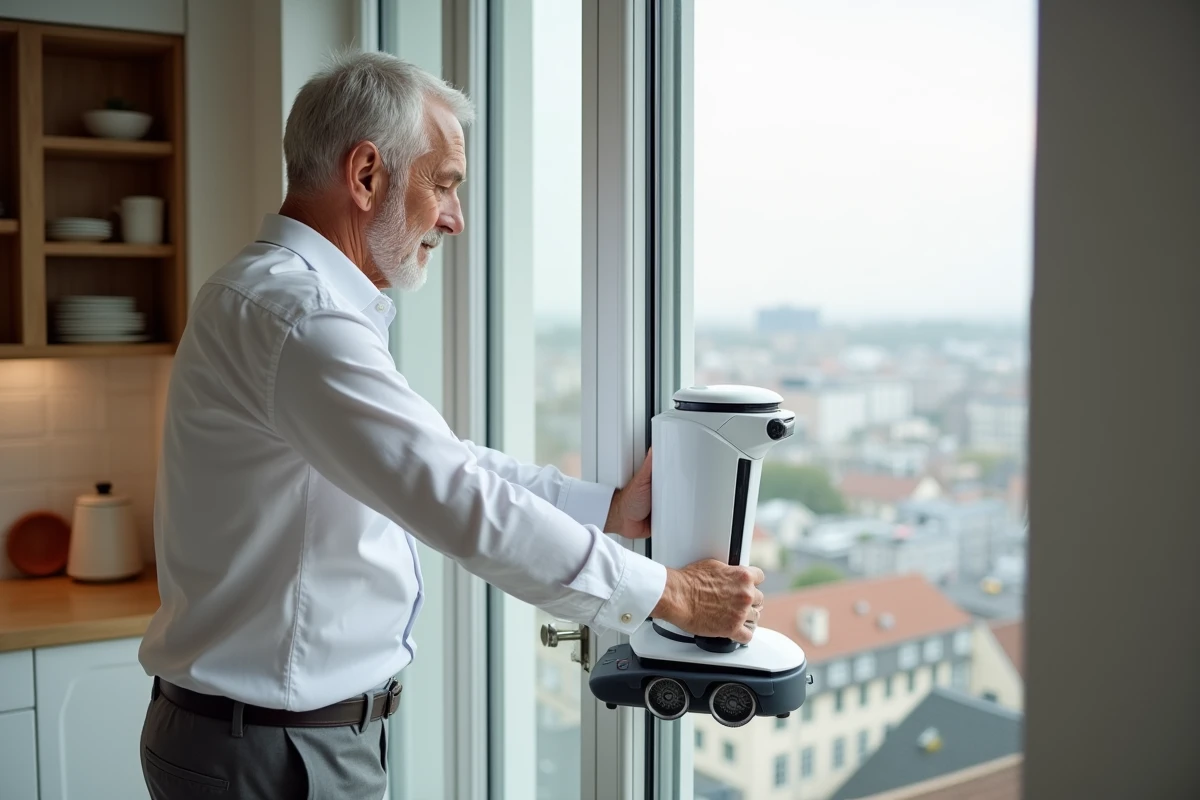
User feedback and tips for choosing your window cleaning robot wisely
The reviews collected by UFC-Que Choisir paint a mixed picture: the practicality of the window cleaning robot is appealing, but the results heavily depend on the variety of your glazing. High windows, wide bays, or frameless surfaces require more vigilance when choosing. Some users praise the ease of setup and the effectiveness of a robot equipped with an integrated tank and high-performance microfibers. Others note the need to sometimes manually go over edges or persistent streaks.
To choose wisely, start by checking the shape of the robot, whether round or square, as it determines its ability to clean into corners. Check the electrical compatibility of your installation: the length of the cable, the presence of a backup battery, or a safety cord can make all the difference, especially in hard-to-reach areas.
Here are the main points to examine before purchasing:
- Choose a model equipped with anti-fall sensors to secure use on high windows.
- Consider the robot’s autonomy, especially for large glass surfaces.
- Look closely at the included accessories: quality of washable microfibers, ease of tank disassembly, ergonomic remote control.
Some appreciate the automatic spraying feature, which speeds up cleaning. To find the right balance, compare your specific needs with the desired frequency of maintenance. Also, consider the type of glazing: thick windows, irregular edges, or large bays may require a more advanced model. Price is a factor, but the robustness of accessories and ease of maintenance will make a difference over time.
The window cleaning robot promises a simplified daily life: technology comes to the window, and it suddenly becomes natural to imagine the chore of window cleaning relegated to the memories of a bygone era.